In short
- One Ottawa firm ties each sound to a part: grinding to worn rollers, a squeal to dry hinges, a rattle to loose bolts, a bang to a broken spring.
- A grind from the ceiling unit while the door barely moves points to the opener's drive gear.
- On that firm's list, a tune-up with lubrication and a balance check is $79 before tax, call-out included.
- HomeStars rates chain drive openers the loudest type, which matters under or beside living space.
Typical prices in Ottawa
| Job | Typical range | Notes |
|---|---|---|
| Tune-up: inspection, lubrication, balance check | $79 | One Ottawa firm’s list, before tax, one door and opener, call-out included; parts quoted separately |
| Roller set, nylon or steel | from $100 | Same firm, before HST; a $150 service call applies when the job comes under $250 |
| Opener repair: gear, logic board or capacitor | from $185 | Same firm, before HST |
| Opener repair, all causes | $49–$299 | HomeStars, Canada-wide guide |
| Opener motor, worn gears or electrical fault | $100–$200 | HomeStars, Canada-wide guide |
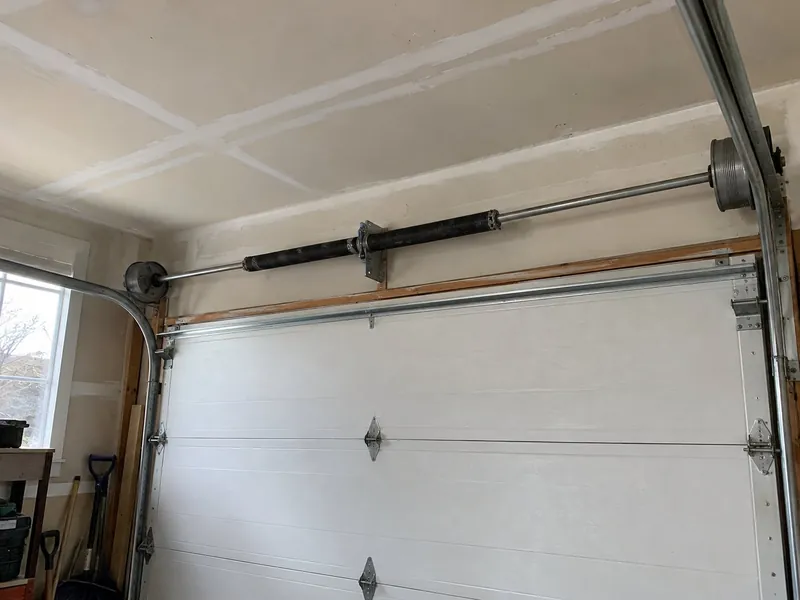
| Torsion spring replaced | $200–$350 | HomeStars, Canada-wide guide; the Ottawa firm lists a single spring from $275 |
Sources. One Ottawa firm’s noisy door guide, its price list and its tune-up page, seen 29.10.2026 (one firm’s list). HomeStars, Garage door repair cost, Canada-wide, published 30.06.2026, seen 29.10.2026. HomeStars, Garage door opener installation, published 06.08.2026, seen 29.10.2026. A Canadian door manufacturer’s guide to a noisy garage door, seen 29.10.2026. Contract rules: Ontario, Guide for home renovation and roofing businesses, seen 29.10.2026.
Ceiling or track: where the sound starts
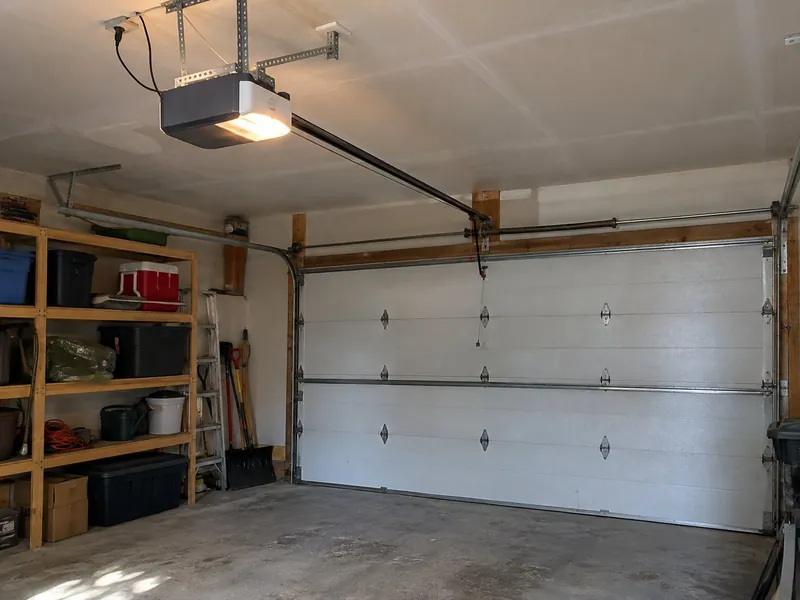
A garage door has two noise sources: the door on its rollers, hinges and springs, and the opener on the ceiling. One Ottawa firm suggests listening once under the ceiling unit and once beside each track, standing clear of the door.
That split decides which parts the company brings. Track side usually means rollers, hinges or a loose bracket; ceiling means the drive, the rail or the gear in the motor head.
Six sounds and the part behind each
The Ottawa firm’s guide matches six sounds to six parts:
- Squeak or squeal. Dry hinges, roller stems or spring coils. The least serious sound on the list.
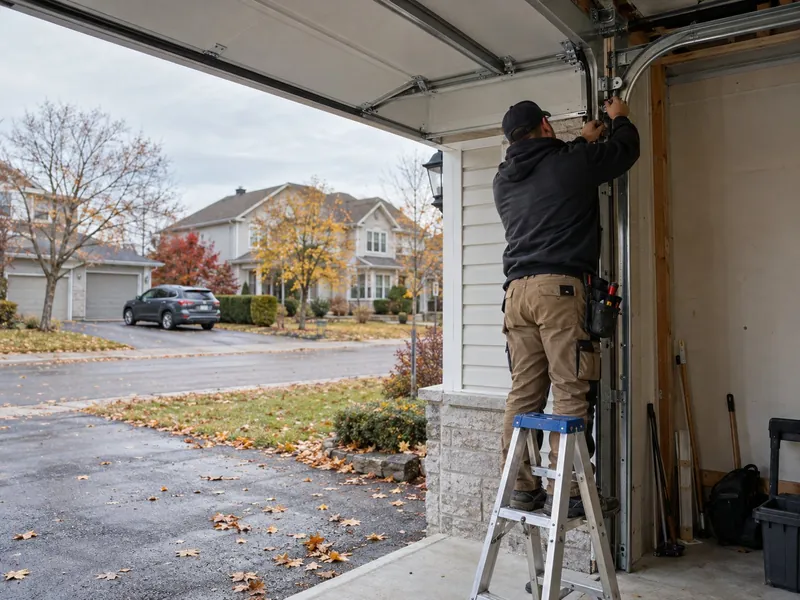
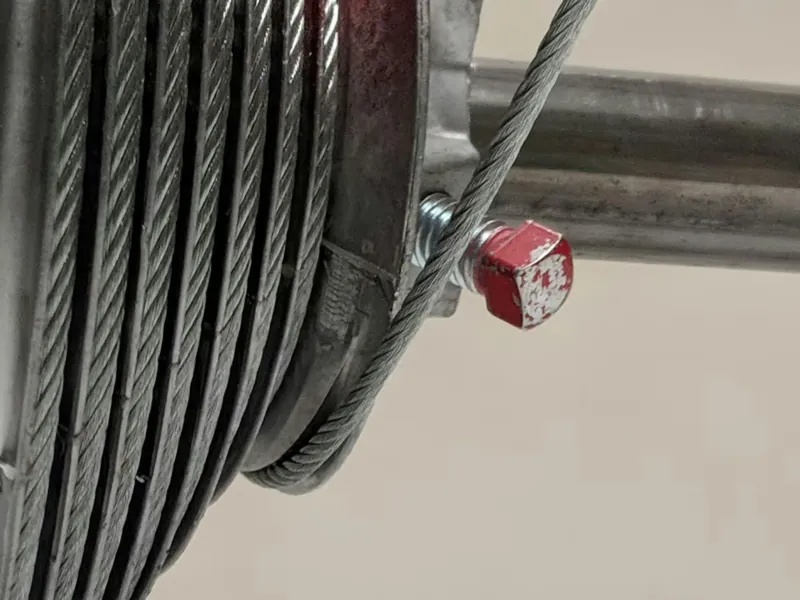
- Rattle or shudder. Bolts on hinges, track brackets or the opener rail worked loose by vibration. The bottom corner brackets hold the cable under spring tension.
- Grind or scrape along the track. Steel rollers worn flat, or roller bearings that drag and stop turning. A bent track gives a similar grind; see door off track if the door also jumps or tilts.
- Pop on a cold morning. Stiff grease and rollers.
- One loud bang, then a heavy door. A broken spring; the opener now faces the full weight of the door. Our springs page covers that repair.
- Grind from the motor head while the door barely moves. A stripped plastic drive gear, often with plastic shavings on the floor under the unit.
A Canadian door manufacturer adds worn hinges on older doors and a slack chain or belt on the opener.
When the opener is the noise
HomeStars ranks the drives by sound: chain is the most affordable and the loudest, belt quieter at a slightly higher price, screw in the middle, direct drive quiet and priced above both.
HomeStars also notes that chain and belt parts wear faster than the motor itself, so a noisy unit can sometimes be repaired. On the Ottawa firm’s list, an opener repair starts at $185 and a new opener installed at $595, both before HST; HomeStars puts motor repairs for worn gears at $100–$200 across Canada. On an old unit the firm leans toward a new opener over a gear rebuild. Our belt vs chain guide compares the two drives.
Rooms above the garage, and concrete walls
With a bedroom over an attached garage, the opener’s hum carries through the framing. The Ottawa firm names rubber vibration isolators where the opener rail mounts to the ceiling. The Canadian door manufacturer notes that a concrete garage can amplify a door that runs correctly, and suggests rubber strips at the supports of the horizontal tracks.
Put the layout in your request: the room above, concrete or wood frame, a drone from the ceiling or a clatter from the door.
Ottawa winters and a louder door
A quiet door in October can creak and pop in January. The Ottawa firm counted an average of 32 nights a winter below −15 °C at Ottawa airport over the last ten winters, from Environment Canada daily data. Tired springs tend to break on cold mornings.
That firm books its pre-winter tune-up from September to early November at the same $79, replacing thickened grease on hinges, rollers and bearings with a lubricant suited to cold. More on our maintenance page.
What a quieting visit costs, and what the quote should list
A tune-up covers inspection, lubrication and a balance check; rollers, a spring or an opener repair are separate lines. On the Ottawa firm’s list, a roller set starts at $100 and a single spring at $275, before HST. A service call starts at $150 and is waived on repairs over $250, so a roller set booked alone carries it.
The written quote should show:
- The part found to be making the noise
- Each replacement part and its count
- Lubrication, tightening and a balance check after the work
- The service call, or a line saying it is waived
- HST on its own line
Ontario’s home renovation guide calls for a written agreement on contracts over $50 and caps charges at 10% above the estimate unless the customer signs a change.
Who you are dealing with
Ottawa Garage Door Desk passes your request to one independent local garage door company. That company calls you back, finds the source of the noise, quotes the parts and does the work.
Questions to ask the company
- Which part makes the sound, and can you show it to me before you replace it?
- Does the tune-up price include the call-out, and which findings are quoted separately?
- If the opener is the source, what is the price of the gear repair and of a new unit?
- Will you check the door's balance and the auto-reverse after the work?
- Is the service call waived if I approve the repair on the same visit?
Have this ready for the call
- A short video with sound from inside the garage: one clip under the ceiling unit, one beside each track
- When the sound happens: going up, coming down, both, or only on cold mornings
- The opener's drive if you know it (chain, belt or screw) and roughly how old it is
- Whether a bedroom or living room sits above or beside the garage
- Any single loud bang, and whether the door now feels heavy or runs crooked
- A clear path to both tracks and to the space under the opener
Questions people ask
Is it safe to keep using a door that makes noise?
A squeak or rattle is wear. One sharp bang followed by a door that will not lift is a broken spring, and one Ottawa firm writes that pressing the button again can snap a cable or strip the opener gear. Leave it closed and say so in your request.
Will lubrication make the door quiet?
The Ottawa firm’s guide says lubricant fixes squeaks and leaves grinding, rattling and banging in place. Of 19 owner reports it reviewed on fixes to the door, 12 found it quieter and 4 heard no change.
Is it the door or the opener?
Almost an even split. The same firm went through 102 owner discussions of noisy doors; of the 24 that ended with a confirmed cause, 9 were the door and 12 the opener, mostly its chain, belt or rail.
Why is the door louder in January?
Cold thickens lubricant and stiffens rollers and seals, the Ottawa firm writes, so mild popping is common. A new, much louder pop, or popping with uneven travel, can mean a binding section, a cable problem or a tiring spring.
Does a tune-up include new parts?
On the Ottawa firm’s list the $79 tune-up covers inspection, lubrication, a balance check and a written report. Parts and repairs found on the visit are quoted separately.